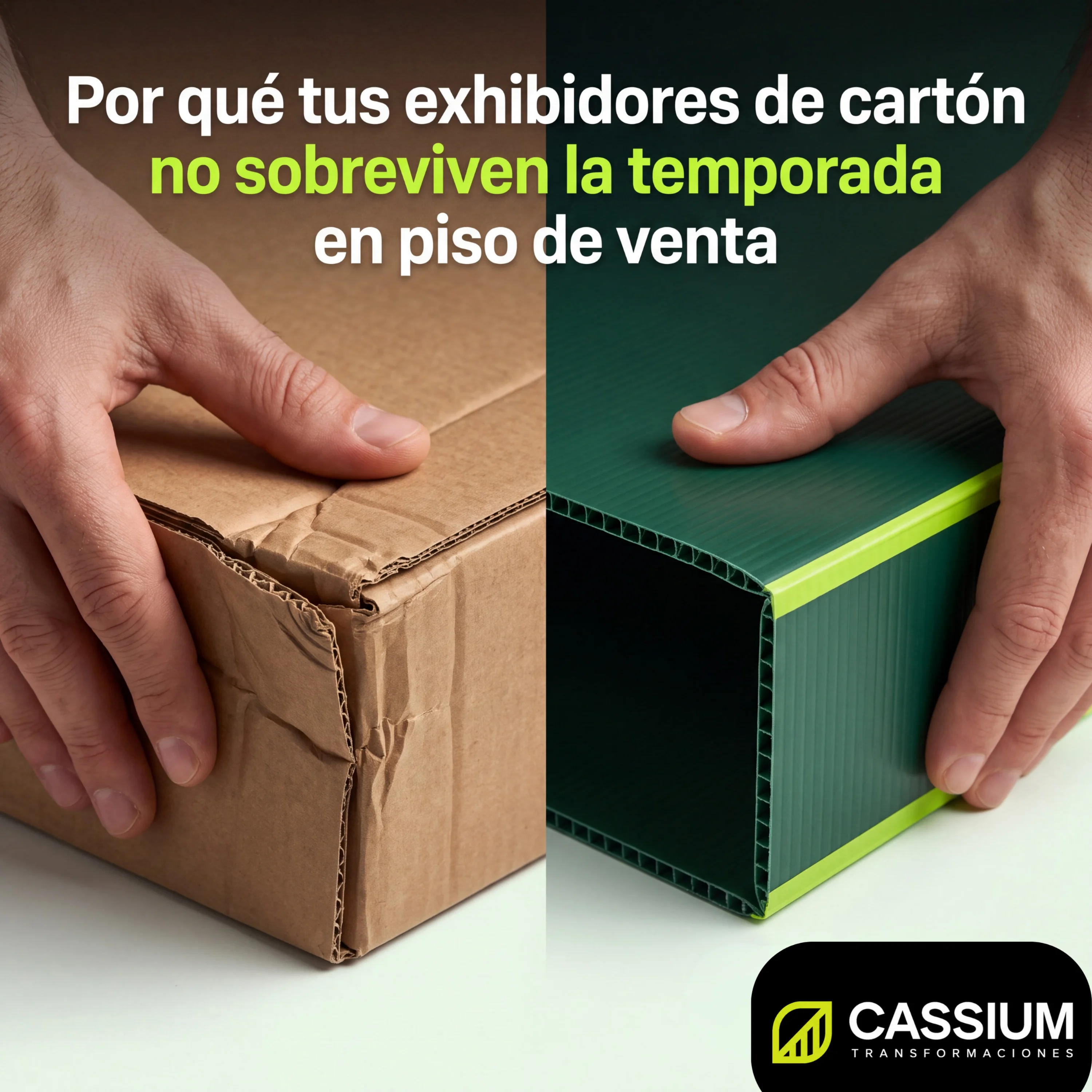
The Hidden Cost of Replacing Displays Mid-Season
Every display replacement has a cost that's almost never fully accounted for: new material, rush freight to get it there before the highest-traffic weekend, and the trade marketing team's time coordinating the swap. When that cost gets multiplied across every location replacing displays during the same season, the real spend ends up far higher than any report that only counts the first installation.
Why Humidity and Weight Are Cardboard's Two Silent Enemies
Cardboard absorbs moisture from the environment and progressively loses structural rigidity, a process that speeds up in retail spaces with frequent cleaning traffic or humid conditions. Combined with the constant weight of the displayed product, that structural weakening ends up as visible warping before the season is even over.
What a Corrugated Plastic Display Withstands That Cardboard Can't
Corrugated plastic doesn't absorb moisture the way cardboard does, maintains its structural rigidity under sustained weight, and withstands repeated restocking handling without warping or losing its appearance. A corrugated plastic display with printing directly on the material keeps its brand image throughout the entire season, instead of deteriorating halfway through.
How to Calculate Whether It's Worth Switching from Cardboard to Corrugated Plastic Displays
Add up the real cost of every cardboard display replacement during the last season, including material, rush freight, and the team's time, and compare it against the investment in a corrugated plastic display that needs no replacement during the same period. At Cassium Transformaciones we manufacture POP material and displays with printing that doesn't fade with handling, built to survive the full season with no replacement.