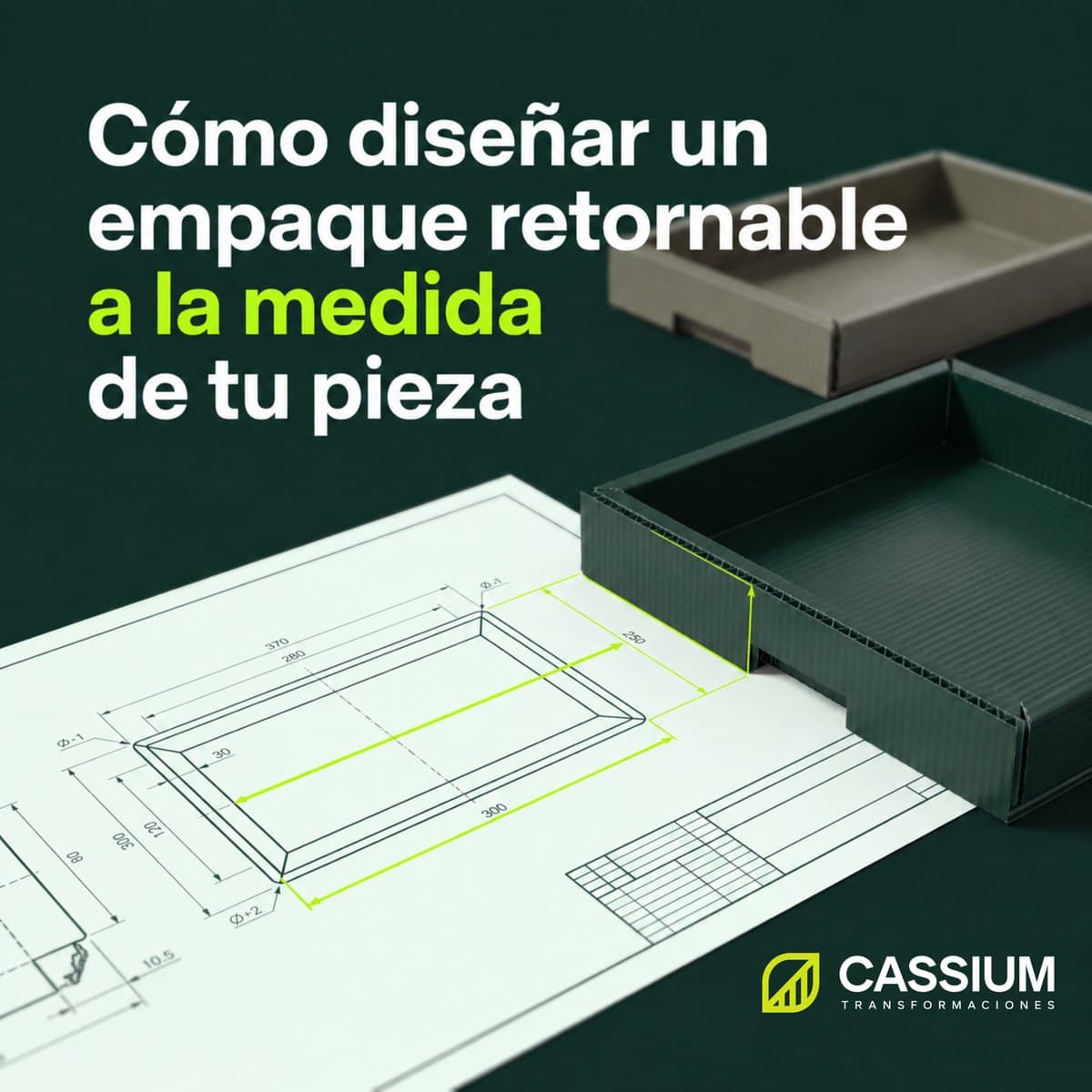
Designing custom packaging means fitting the gauge, dimensions, and geometry of the package exactly to what your part needs, without paying for overdesign or accepting less protection than your product requires.
Why the Fear of Overpaying Stalls Custom Packaging Projects
The fear of overpaying is understandable: no one wants to invest in a custom development that ends up costing more than necessary. But that fear is usually rooted in a mix-up about what designing custom packaging actually means.
The Confusion Between "Custom-Fit" and "Overdesigned"
An overdesigned package uses more material, a heavier gauge, or more reinforcement than the part actually needs, raising cost with no real gain in protection. A custom-fit package does exactly the opposite: it matches every dimension and every spec to what the part needs, with no wasted material and none missing either.
The Real Cost of Sticking With a Generic Package That Doesn't Fit
A generic package that leaves empty space around the part allows movement during transport, and that movement is the most common cause of parts getting damaged in transit. The cost of replacing damaged parts, plus the time spent managing each incident, is rarely compared against the cost of developing a package that eliminates that movement by design.
How the Custom Design Process Works With In-House Extrusion
The custom design process with in-house extrusion lets the package be fitted to your specific part, instead of forcing your part to fit into a catalog of predefined sizes.
It Starts From Your Part's Real Dimensions, Not a Catalog of Standard Sizes
The process starts with the exact dimensions of your part, its specific geometry, and the points where it needs support or extra protection. That information defines the package's design, instead of forcing your part to fit the closest size in a generic catalog.
Gauge Is Matched to Your Product's Specific Weight and Fragility
Material gauge, between 2 and 6 mm depending on the application, is set based on your part's weight and how fragile or resistant it is to handling. A light, sturdy part doesn't need the same gauge as a heavy or delicate one, and adjusting that variable avoids paying for strength your product doesn't require.
What Information Your Supplier Needs to Design the Right Package
To design the right package, your supplier needs specific information about your part and your handling process.
Exact Dimensions and Acceptable Movement Tolerances
Share the exact dimensions of your part and how much movement is acceptable inside the package without risking damage. That tolerance determines how tight the final design needs to be.
Handling Conditions: Stacking, Transport, Expected Reuse Cycles
Let your supplier know if the package will be stacked, how many times it will be transported, and how many reuse cycles you expect before replacing it. Those conditions directly affect the gauge and structural reinforcement the final design needs to include.
How the Cost of Custom Packaging Compares to Generic Packaging
Comparing the cost of custom packaging against generic packaging requires looking beyond the initial purchase price per piece.
The Cost Per Damaged Part That No One Tracks With Generic Packaging
Few companies keep an exact record of how much each part damaged by an ill-fitting package costs them. Adding up that cost, multiplied by monthly shipping volume, usually reveals that generic packaging is already costing more than a custom development would.
Cost Per Usage Cycle, Not Just the Initial Development Cost
Custom returnable packaging is designed for multiple usage cycles, up to 40 documented uses under normal handling conditions. Dividing the development cost across those cycles usually results in a much lower cost per use than continuing to buy generic packaging on a recurring basis.
How to Start a Custom Packaging Project Without Committing Your Entire Volume
You don't need to migrate your entire packaging volume on day one to validate whether a custom development makes sense for your operation.
Start With the Part That Accumulates the Most Damage Today
Identify the part or line with the highest percentage of in-transit damage with your current packaging, and start the custom development specifically there. That part usually shows the fastest return on the initial design investment.
Use the First Usage Cycles as Evidence for the Rest of Your Catalog
Once the custom package proves its performance over the first real usage cycles, that evidence becomes the basis for deciding whether it's worth extending the development to other parts or lines in your operation.
At Cassium Transformaciones we design returnable packaging custom-fit to your part, with in-house extrusion that lets us adjust gauge, dimensions, and reinforcement without overdesign. Share your part's dimensions and handling conditions and we'll help you determine whether a custom development makes sense for your volume.